Disclaimer: This post is solely to understand the notion of head-covering in various religions. It shall not apply in any form of educational purpose. It does not indicate to humiliate or besmirch any religious beliefs. Moreover, it shall not be in use of defaming any religion mentioned herein.
Head-covering is a controversial subject over the globe. The one factor that is common about head-covering is that aside from Islam, other religions such as Catholic, Jewish and Hinduism use this as a part of their custom. However, the contrast is the rulings concerning this subject.
To commence with, in Jewish teaching, married Orthodox Jewish women has to cover their hair to stay modest. Jewish hair-covering originated from the description in the Sotah ritual which described in the book of numbers in Hebrew Bibles or the fourth of five books of the Jewish Torah (Torah).

According to the Torah, this ritual meant to testify the fidelity of a wife accused of adultery. Part of this ritual describes the accused wives to have their hair uncovered. Hence the married Orthodox women use either a scarf, a hat or a wig; known as Sheitel to cover their hair.
However, as time passed, this original ritual was interpreted differently by various Jewish scholars, and according to the Jewish Lawbook which compiled in the second century C.E., head-covering is not an initial Bibalic obligation.
Thus, women use a head-covering as a representation of their marital status from being single to married, whereas, the conservative Jewish women only cover heads while performing religious activities. Nevertheless, seen in public with loose hair is considered as a ground to divorce women in the Jewish Lawbook, and it is encouraged for married women to cover their hair as it shows their modesty.
According to the Old Testament, when Isaac (peace be upon) visited Rebekah (his wife) before their marriage, she covered herself with a veil.
There is no precise statement in the Bible betokening women to cover their heads, according to the writings. When Isa or Jesus (peace be upon him), was given the prophethood, Hebrews who have already adopted the education of the Torah had accompanied him.
Moreover, looking at the old Church teachings, it is explicit that women were recommended to cover heads while entering the Church and offering prayers to show their respect towards the Church.
Wherefore the Catholic nuns and sisters wear Habit to cover their heads. For nuns and sisters, those who donated their lives detached from the public in sacred activities, Habit reflected as a symbol of their pledge to live humble and modest lives. It also used to distinguish them between the rookies while working per orders blended within the society, the Habit which became prevalent around the 12th century, donned unto the late 20th century.
Since expectations encompassing women’s performance stirred to be less traditionalistic in the late 20th century, most of the nuns working for orders opted to don with modern clothes, and for the followers, until the 18th century, head covering in public, and while attending to Church was considered as a part of the custom.
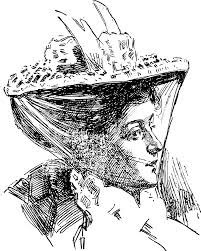
Even the European Law specified women who uncover their hair in public as evidence of their infidelity back then while deeming them as prostitutes.
Every woman praying or prophesying with her head uncovered disgraces her head, for it is the same as if she were shaven. For if a woman is not covered, let her be shaven. But if it is a disgrace for a woman to have her hair cut off or her head shaved, let her cover her head”
(Corinthians 11) – St. Paul to Church Corinth
Looking into the head-covering history of Hinduism, Hinduism followed mainly by Indian, head-covering is a part of their custom. For them, hair reflects the beauty of women. To date, married women in India often seen don in Ghoonghat covering their head whereas, most of them cover their faces along with the head. Though covering face was not authorized in any of Hindu scriptures, from the 1st Century B.C. onward married women were encouraged to cover their faces.
According to Hindu teachings, in the marriage ceremony, the bride shall wear a veil screening her face, and yet after moving to the husband dwelling, she would endure covering the face veil until advised by the in-laws to uncover her face. Furthermore, women have to veil their faces from all male relatives of their husbands and his seniors.

Moreover, compared to all other faiths, women covering their hair while performing religious activities and entering the temple is an obligation followed to date in Hinduism.
In Islam, the Quran teaches the general rule on how to dress. Both men and women are acceptable to use clothing that enhance their beauty while covering nakedness. Nevertheless, the most important thing is to be modest and righteous.
“0 Children of Adam!15 Indeed We have sent down to you a garment which covers your shame and provides protection and adornment. But the finest of all is the garment of piety. That is one of the signs of Allah so that they may take heed.”
Chapter 7 , Verse No. 26
By the time Islam came as faith, in the year 610, Arabian women dressed in veil to show off their class and status. However, in His revelation, Allah has instructed women to lower their gaze and to guard their modesty.
Women should cover themselves and not to show off their beauty to any man except their immediate family members (including father, brothers, both side grandfathers, and uncles), husbands, and young children.
The Politics of the Veil (The Public Square)
“And enjoin believing women to cast down their looks and guard their private parts and not reveal their adornment except that which is revealed of itself, and to draw their veils over their bosoms, and not to reveal their adornment save to their husbands, or their fathers, or the fathers of their husbands, or of their own sons, or the sons of their husbands, or their brothers, or the sons of their brothers, or the sons of their sisters, or the women with whom they associate, or those that are in their bondage, or the male attendants in their service free of sexual interest, or boys that are yet unaware of illicit matters pertaining to women. Nor should they stamp their feet on the ground in such manner that their hidden ornament becomes revealed. Believers, turn together, all of you, to Allah in repentance that you may attain true success.”
Chapter 24, Verse No. 31
“O Prophet, enjoin your wives and your daughters and the believing women, to draw a part of their outer coverings around them.It is likelier that they will be recognised and not molested. Allah is Most Forgiving, Most Merciful.”
Chapter 33, Verse No. 59
The basic understanding of; guard their modesty, is to cover the private parts, which includes the chest of women draws their veils over their bosoms. Therefore, women required to cover their hair while they are amidst strangers (men) and likewise, when they step out of their houses.
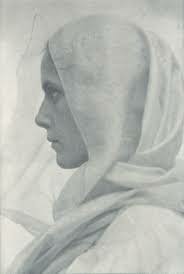
The interpretation of outer garment here means jalabib, plural of jilbab. However, this jilbab does not mean the present-day garment worn by Muslim women’s. This jilbab typically translated with general terms such as outer garments or cloaks.
There are many descriptions of jilbab while the most common scholarly interpretations are a sheet-like full-body garment which is similar to present jilbab and a coat or a cloak. However, some scholars assert that the modern jilbab is identical to the Quranic denotation while others believe that present-day garment only introduced in the late 20th century.
This verse also indicates the importance for women to cover themselves to distinguish them from others, as that time was unsafe for women to travel alone.
Muslim Women & The Hijab Veil: Oppression or Liberation?
However, this rule relaxed on older women, and it the Quran state that there is no blame on the women who passed their youth and who do not wish to remarry to lay aside their outer garments.
The women who are past their youth (and can no longer bear children) and do not look forward to marriage will incur no sin if they cast off their outer garments without displaying their adornment. But if they remain modest, that is still better for them. Allah is All-Hearing, All-Knowing.
Chapter 24, Verse No. 60
In conclusion, hair covering was practically followed in all religions up until the 20th century. However, as more women attaining educated in the last few decades, people embracing veil according to their faiths has increased.
The Muslim Next Door: The Qur’an, the Media, and That Veil Thing
The Face Behind The Veil: The Extraordinary Lives of Muslim Women in America




 theblankminders